Once your irrigation system has been winterized, you may wonder what to do with the controller. Should you turn it off completely, leave it powered on, or simply disable the watering schedule until spring?
For Connecticut homeowners, the answer depends on the type of irrigation controller installed. In most cases, the controller should be placed in its OFF or appropriate winter setting once the irrigation system has been properly winterized. However, that doesn’t always mean disconnecting it from electrical power.
Understanding the difference can help you avoid unnecessary watering commands and make restarting your irrigation system easier in spring.
What Happens to Your Irrigation Controller During Winter?
Your irrigation controller is responsible for managing when and how long each zone operates. During the growing season, it follows a programmed schedule to deliver water to different areas of your landscape.
Once the system is winterized, those watering schedules are no longer needed.
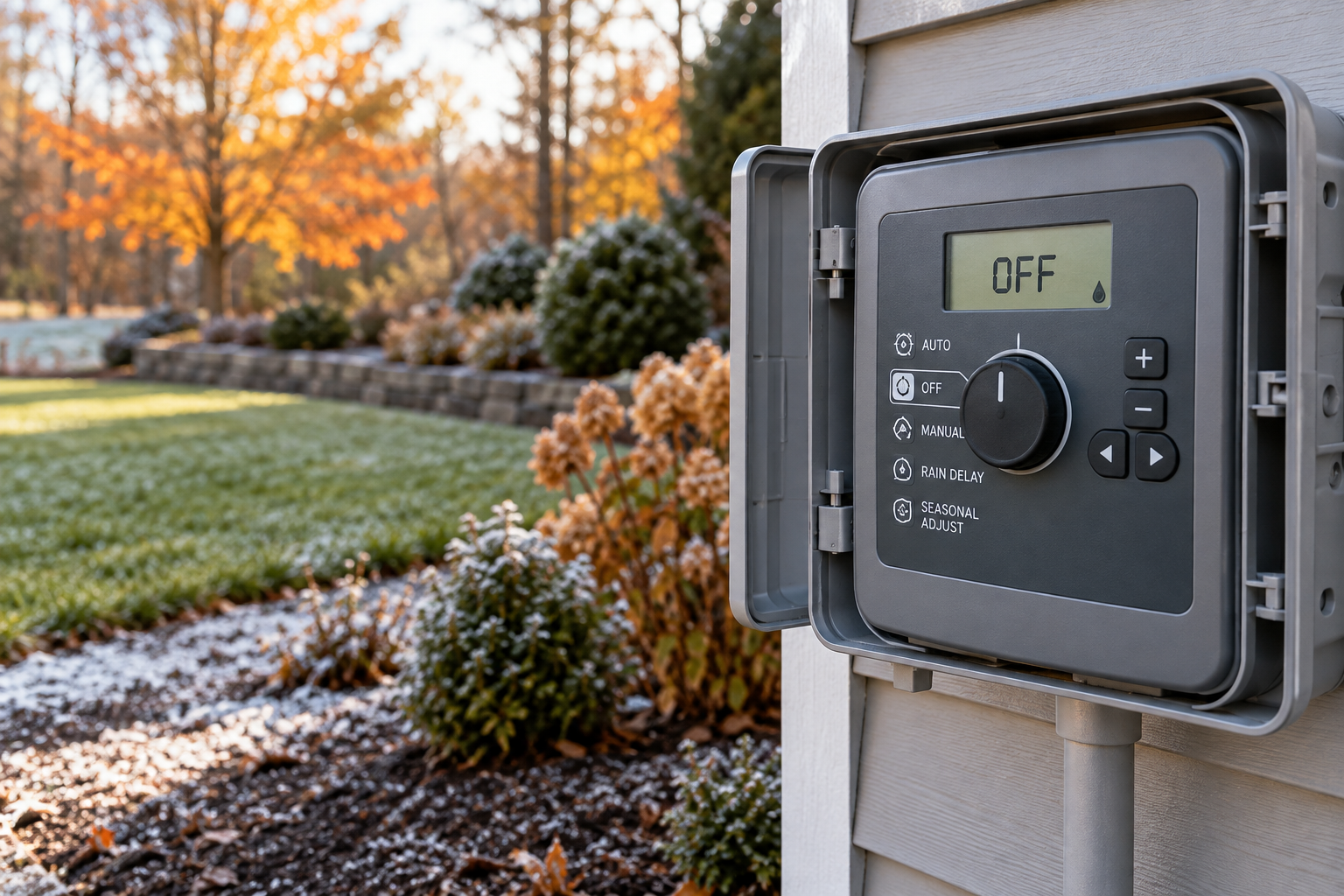
Most controllers offer several operating modes, including:
- Run or Auto: Allows the controller to operate according to its programmed watering schedule.
- Off: Disables automatic watering while typically retaining the controller’s settings.
- Rain or Pause: Temporarily suspends watering, depending on the controller’s features.
- Seasonal Adjust: Changes programmed watering durations without requiring a complete schedule reset.
For winter, the goal is to prevent automatic watering while preserving the settings needed for the next growing season.
Should You Turn Off the Controller or Disconnect the Power?
For many irrigation controllers, selecting the OFF position is sufficient.
This prevents the controller from activating irrigation zones while allowing it to retain its programmed settings, date, time, and other information.
Disconnecting the power may not be necessary and, depending on the controller, could cause settings or time information to be lost.
Some controllers use backup batteries or nonvolatile memory to preserve programming during a power outage. Others may require certain information to be restored when power returns.
The best approach is to follow the manufacturer’s recommendations for your specific controller.
What About Smart Irrigation Controllers?
Smart irrigation controllers often have additional features that make seasonal shutdown easier.
Many can be placed in an OFF or standby mode through a mobile app or the controller itself. Depending on the model, they may also retain watering schedules, weather-based settings, and other preferences while automatic irrigation is disabled.
For homeowners using smart irrigation technology, winter is a good time to:
- Confirm that automatic watering has been disabled
- Check that programmed schedules are saved
- Review any active notifications or alerts
- Verify that the controller is operating in the recommended winter mode
Leaving a smart controller powered on may allow it to maintain connectivity and settings, but the correct approach depends on the equipment.
Does Turning Off the Controller Winterize Your Irrigation System?
No. This is an important distinction.
Turning off your irrigation controller is not the same as winterizing your irrigation system.
The controller manages watering schedules, but it does not necessarily remove water from pipes, valves, sprinkler heads, or other irrigation components.
Even with the controller turned off, water may remain inside the system and become vulnerable to freezing temperatures.
Proper winterization involves preparing the irrigation system itself for cold weather, including shutting off the water supply and removing water from vulnerable components using the appropriate procedures.
The controller should be addressed as part of that process, not as a replacement for it.
Should You Leave Your Controller in Rain Mode All Winter?
Rain mode is designed primarily for temporary interruptions to normal watering schedules.
Depending on the controller, rain mode may suspend irrigation for a set number of days or until a sensor allows watering to resume.
That makes it useful during rainy weather, but not necessarily the best choice for an entire Connecticut winter.
A dedicated OFF or winter setting is generally more appropriate because it prevents watering schedules from resuming unexpectedly.
Check your controller’s instructions to determine which setting is recommended for seasonal shutdown.
What If Your Controller Is Installed Outdoors?
Some irrigation controllers are designed for outdoor installation, while others are intended for indoor use only.
Outdoor-rated controllers typically have protective enclosures designed to withstand normal weather exposure. However, homeowners should still make sure the enclosure is securely closed and free from visible damage.
Avoid disconnecting electrical components, removing wiring, or opening protected equipment unless the manufacturer’s instructions specifically call for it.
If you’re unsure how your outdoor controller should be handled during winter, refer to the equipment documentation or consult your irrigation professional.
Will Your Irrigation Settings Still Be There in Spring?
In many cases, yes.
Modern irrigation controllers often retain programmed schedules even when watering is disabled. Some also preserve settings during power interruptions.
However, the controller may still need attention when the system is restarted in spring.
Before regular watering resumes, it’s a good idea to review:
- Current date and time
- Watering start times
- Zone run times
- Watering days
- Seasonal adjustment settings
- Rain sensor operation
- Smart controller connectivity, if applicable
Spring is also an opportunity to update the schedule based on current landscape conditions rather than automatically returning to last summer’s settings.
A Simple Winter Checklist for Your Irrigation Controller
Once your irrigation system has been professionally winterized, a few basic checks can help ensure the controller is ready for the off-season.
- Confirm that the irrigation system has been properly winterized.
- Place the controller in its recommended OFF or winter setting.
- Verify that automatic watering schedules are disabled.
- Leave the controller powered according to the manufacturer’s instructions.
- Make sure outdoor controller enclosures are properly secured.
- Review the controller settings again during spring startup.
These small steps can help prevent confusion when it’s time to begin watering again.
Preparing for a Smooth Spring Startup
Your irrigation controller plays an important role in keeping your landscape properly watered throughout the growing season. Giving it a little attention at the end of the year can make the transition into spring easier.
For most Connecticut homeowners, the best winter approach is straightforward: properly winterize the irrigation system, disable automatic watering, and follow the manufacturer’s recommendations for keeping the controller powered or shut down.
When warmer weather returns, your controller can be reviewed, adjusted, and programmed to meet the needs of the new growing season.
Frequently Asked Questions
Should I unplug my irrigation controller during winter?
Usually, unplugging isn’t necessary. Many controllers can remain powered while automatic watering is disabled. Check the manufacturer’s instructions because power requirements and memory features vary by model.
Will turning off my sprinkler controller erase the programming?
Most modern irrigation controllers retain their programmed schedules when placed in OFF mode. Some also preserve settings during power outages, although date and time information may need to be reset.
Can a smart irrigation controller stay connected during winter?
Yes, many smart controllers can remain powered and connected while watering is disabled. The recommended winter setting depends on the manufacturer and model.
Is rain mode the same as turning off the irrigation controller?
Not always. Rain mode may only suspend watering temporarily, while OFF mode generally disables automatic irrigation until the controller is reactivated.
Does turning off the irrigation controller protect pipes from freezing?
No. Turning off the controller prevents scheduled watering but does not remove water from irrigation pipes, valves, or sprinkler heads. Proper winterization is still necessary to reduce the risk of freeze damage.